
28 July, 2026
How to Choose the Best Engineering College After Class 12 in Tamil Nadu
Choosing the right engineering college after Class 12 is one of the most significant decisions in a student's academic journey. The institution you choose will shape your technical knowledge, professional skills, career opportunities, and overall personal development. With hundreds of engineering colleges in Tamil Nadu, making an informed choice requires evaluating several important factors beyond rankings and advertisements.
From accreditation and faculty expertise to placement opportunities, infrastructure, and the range of Engineering Courses offered, several factors contribute to a quality engineering education. By understanding what truly matters, students and parents can make an informed decision that aligns with their career goals.
Whether you aspire to become a software engineer, AI specialist, electronics expert, or mechanical engineer, this guide will help you choose the best engineering college after Class 12.
Why Choosing the Right Engineering College Matters
Engineering is one of the most sought-after career paths in India because it offers diverse opportunities across technology, manufacturing, healthcare, infrastructure, finance, and research sectors. However, your success depends not only on your dedication but also on the quality of education and practical exposure you receive.
A good engineering college helps students:
- Build strong technical knowledge
- Gain practical hands-on experience
- Develop communication and leadership skills
- Participate in internships and live projects
- Connect with industry professionals
- Secure better placement opportunities
Instead of selecting a college based solely on popularity, evaluate how effectively it prepares students for the evolving demands of the engineering industry.
What Makes the Best Engineering College?
The best engineering college is not necessarily the one with the biggest campus or highest rankings. It's the one that provides quality education, industry exposure, and the right environment for students to grow academically and professionally.
1. Check AICTE Approval and University Affiliation
The first step is ensuring that the college is approved by the AICTE and affiliated with a recognized university such as Anna University. Departments accredited by the National Board of Accreditation (NBA) indicate that they meet high standards in engineering education and outcome-based learning; students should check whether their chosen department is NBA accredited.
These recognitions ensure that:
- The curriculum meets academic standards.
- Your degree is recognized by employers.
- You are eligible for higher education opportunities.
- Government and private organizations accept your qualifications.
Never compromise on accreditation when choosing an engineering college.
2. Evaluate the Engineering Courses Offered
The variety and relevance of Engineering Courses offered by a college play a crucial role in shaping your career. Among the most in-demand engineering disciplines today are:
- Computer Science and Engineering
- Artificial Intelligence & Data Science
- Information Technology
- Electronics & Communication Engineering
- Electrical & Electronics Engineering
- Mechanical Engineering
Before choosing a specialization, ask yourself:
- Which subjects interest me the most?
- What industries do I want to work in?
- What are the future career prospects?
A college offering modern and industry-relevant programs gives students greater flexibility and career opportunities.
3. Look for Experienced Faculty
Faculty members influence your academic experience more than any other factor. Experienced professors help students by:
- Simplifying complex concepts
- Guiding research projects
- Encouraging innovation
- Mentoring students personally
- Supporting technical competitions
- Providing career advice
Faculty members with industrial experience and active research publications can further enhance students� learning through practical insights and innovation.
4. Prioritize Practical Learning
Engineering is not just about textbooks. The best colleges focus on experiential learning through:
- Advanced laboratories
- Project-based learning
- Industrial visits
- Technical workshops
- Internships
- Prototype development
- Research activities
- Patent development
- Startup incubation
- Centre of Excellence
Hands-on experience allows students to apply classroom knowledge to real-world engineering challenges, making them more confident and industry-ready.
5. Review Placement Support
For many students and parents, placements are among the most important considerations. Students should review the consistency of placement records over the past three to five years, the diversity of recruiting companies, and opportunities for higher studies and entrepreneurship.
A strong placement ecosystem should include:
- Aptitude training
- Technical interview preparation
- Soft skills development
- Resume-building workshops
- Mock interviews
- Career counselling
- Campus recruitment drives
The best engineering college prepares students throughout their academic journey rather than only during their final year.
6. Check Industry Exposure
The engineering industry evolves rapidly, making industry interaction essential. Look for colleges that organize:
- Industrial visits
- Guest lectures
- Internship programs
- Industry collaborations
- Live projects
- Technical symposiums
- Hackathons
- Innovation challenges
- MOUs with industries
- International collaborations
These opportunities help students understand workplace expectations while improving their employability.
7. Assess Campus Infrastructure
A productive learning environment enhances both academic performance and student life. Important facilities include:
- Smart classrooms
- Innovation Labs
- Computer centres
- Digital Library
- Seminar halls
- High-speed Wi-Fi
- Hostel accommodation
- Cafeteria
- Sports facilities
- Transportation
- Language Laboratory
Modern infrastructure supports practical learning and provides students with the resources they need to succeed.
8. Focus on Student Development
Engineering education should extend beyond technical knowledge. The best colleges encourage students to develop:
- Leadership qualities
- Communication skills
- Teamwork
- Critical thinking
- Time management
- Creativity
- Entrepreneurship
- Professional ethics
- Emotional Intelligence
- Presentation Skills
- Problem Solving
- Networking Skills
Participation in clubs, cultural events, technical fests, and sports helps students become well-rounded professionals.
Checklist Before Choosing an Engineering College
Use this checklist while comparing colleges:
| Factor | Average College | Excellent College |
|---|---|---|
| AICTE Approval | Yes | Yes |
| NBA Accreditation | Few Departments | Most Departments |
| Placement Training | Final Year only | From First Year |
| Industry Exposure | Limited | Frequent |
| Internships | Optional | Mandatory |
| Laboratories | Basic | Advanced |
| Faculty | Experienced | Experienced + Industry Exposure |
| Innovation | Few Activities | Hackathons, Startups, Patents |
If a college performs well across these areas, it is more likely to provide a rewarding educational experience.
Questions Every Student Should Ask
Before finalizing your admission, ask these questions:
- Is the college AICTE-approved?
- Is it affiliated with a recognized university?
- Which Engineering Courses are available?
- What placement support does the college offer?
- Are internships encouraged?
- Do students work on real-world projects?
- Are laboratories equipped with modern technology?
- Does the college provide Career Guidance?
- What extracurricular opportunities are available?
- Does the campus promote innovation and entrepreneurship?
Answering these questions will help you compare colleges objectively.
Why Chettinad College of Engineering & Technology Is a Strong Choice
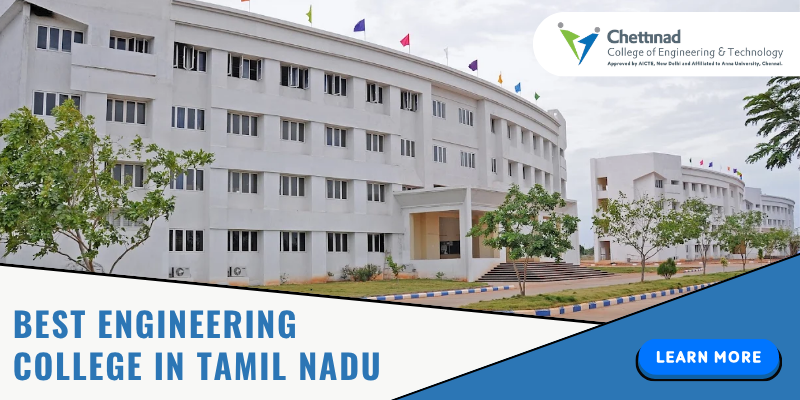
Chettinad College of Engineering & Technology (CCET), Karur, exemplifies many of the qualities students should look for when selecting an engineering institution. With its focus on academic excellence, practical learning, industry interaction, and career development, CCET aims to prepare students for the evolving demands of the engineering profession.
The college offers undergraduate Engineering Courses in:
- Computer Science & Engineering
- Artificial Intelligence & Data Science
- Information Technology
- Electronics & Communication Engineering
- Electrical & Electronics Engineering
- Mechanical Engineering
In addition, postgraduate programs provide opportunities for students who wish to continue their academic and professional development.
Rather than relying solely on classroom instruction, CCET emphasizes experiential learning through:
- Well-equipped laboratories
- Smart classrooms
- Technical workshops
- Industrial visits
- Project-based learning
- Internships
- Technical clubs
- Innovation activities
- Hackathons
- Entrepreneurship initiatives
The college also places strong emphasis on career development. Students receive continuous placement support through aptitude training, communication skills development, mock interviews, resume-building sessions, and Career Guidance, helping them become industry-ready professionals.
Alumni Success That Inspires Future Engineers
One of the strongest indicators of a college's quality is the success of its graduates. Chettinad College of Engineering & Technology takes pride in its alumni, who have built successful careers in leading national and multinational organizations.
Some notable alumni include:
- Karthik Sekar (Batch 2012, Computer Science & Engineering) � Packaged App Associate Manager at Accenture
- Raghul Sivasubramanian (Batch 2015, Electronics & Communication Engineering) � Lead Engineer at Collins Aerospace
- Ashok Veerakkannu (Batch 2016, MBA) � Risk & Compliance Manager at Zoho Corporation
- Swetha R (Batch 2023, Electronics & Communication Engineering) � Engineer at Renault Nissan Technology & Business Centre India
These achievements highlight the college's commitment to preparing students for successful careers across technology, aerospace, business, and automotive industries. Alumni also contribute to the institution through mentorship, career guidance, and industry interactions, helping current students gain valuable insights into professional growth. Their achievements demonstrate the institution's commitment to producing graduates who excel across diverse industries, including information technology, aerospace, automotive engineering, and business management.
Why Students Prefer Engineering Colleges in Tamil Nadu
Tamil Nadu has consistently been one of India's leading destinations for engineering education. The state offers a strong academic ecosystem, experienced faculty, advanced infrastructure, and excellent industry connectivity.
Students choose engineering colleges in Tamil Nadu because they provide:
- Diverse engineering specializations
- Industry-oriented education
- Practical learning opportunities
- Strong placement support
- Research and innovation culture
- Exposure to emerging technologies
- Career-focused training
Choosing the right institution within this ecosystem allows students to maximize these opportunities and build a successful engineering career.
Final Thoughts
Choosing the best engineering college after Class 12 is a decision that deserves careful consideration. Instead of focusing only on rankings or marketing claims, evaluate factors such as accreditation, faculty expertise, infrastructure, placement support, industry exposure, campus facilities, and the range of Engineering Courses available.
A college that combines academic excellence with practical learning and career development equips students with the skills required to thrive in today's competitive engineering landscape.
For students exploring engineering colleges in Tamil Nadu, institutions like Chettinad College of Engineering & Technology demonstrate how quality education, experiential learning, and strong career support can help transform aspirations into successful engineering careers.
The right engineering college is not merely a place to earn a degree�it is the foundation for lifelong learning, innovation, and professional success. By carefully evaluating your options and choosing an institution that aligns with your aspirations, you can confidently begin your journey toward becoming a successful engineer.
Frequently Asked Questions
1. How do I choose the best engineering college after Class 12?
Look for AICTE approval, university affiliation, experienced faculty, practical learning opportunities, placement support, internships, infrastructure, and student development initiatives before making your decision.
2. Which Engineering Courses offer the best career opportunities?
Computer Science & Engineering, Artificial Intelligence & Data Science, Information Technology, Electronics & Communication Engineering, Electrical & Electronics Engineering, and Mechanical Engineering continue to offer strong career prospects across various industries.
3. Why is practical learning important in engineering?
Practical learning helps students apply theoretical concepts through laboratory work, projects, internships, industrial visits, and workshops, making them better prepared for real-world engineering challenges.
4. How important are placements when selecting an engineering college?
Placements are an important consideration because they reflect a college's industry connections and career support. A dedicated Placement Cell, skill development programs, and internship opportunities significantly improve employability.
5. Why should students consider engineering colleges in Tamil Nadu?
Tamil Nadu offers a well-established engineering education ecosystem with quality institutions, experienced faculty, modern infrastructure, and strong industry collaboration, making it an excellent destination for engineering studies.
6. Why is Chettinad College of Engineering & Technology a good choice?
Chettinad College of Engineering & Technology combines quality engineering education with practical learning, industry exposure, placement training, experienced faculty, modern infrastructure, and student development initiatives. Its successful alumni working at organizations such as Accenture, Collins Aerospace, Zoho Corporation, and Renault Nissan Technology & Business Centre India further reflect the college's focus on preparing students for rewarding careers.